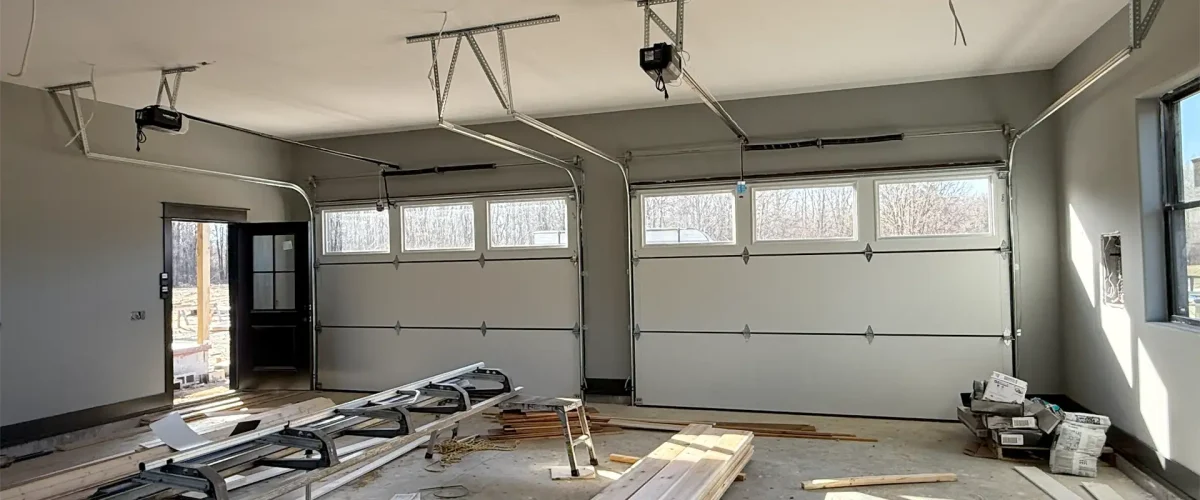
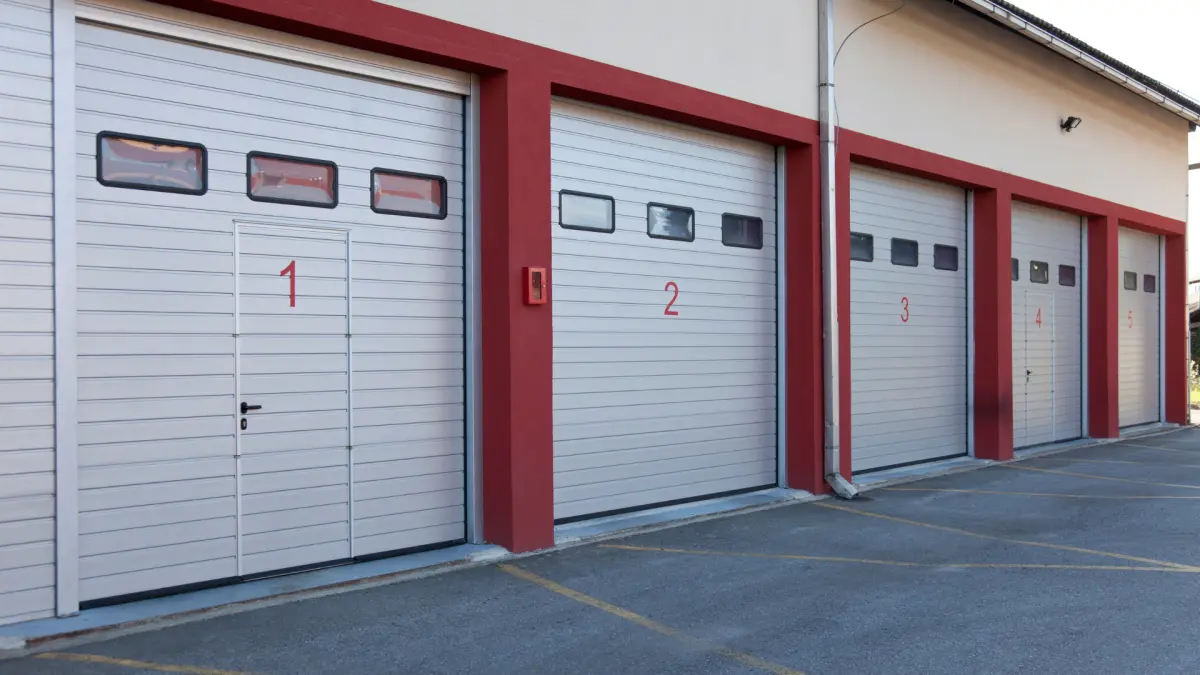
Commercial garage doors don’t fail the way residential ones do. A homeowner using their door four or five times a day notices changes quickly because they’re the only one interacting with the system. A business running a loading dock, service bay, or warehouse has employees, delivery drivers, and equipment moving through the door all day, and no single person owns the observation of how that door is performing. Problems develop incrementally across hundreds of daily cycles until the door stops mid-travel and the business discovers what it had been communicating for weeks.
One pattern that shows up consistently on commercial repair calls is a door that has been gradually slowing its cycle time for weeks before anyone notices. The opener takes a half-second longer to complete each cycle than it did six months ago. No single person in the facility tracks that change because it happens across thousands of cycles rather than overnight. By the time the call comes in, the torsion spring tension has degraded to where the motor is carrying load it was never designed for, and what started as a spring adjustment has become a spring replacement plus full opener calibration job. The business owner almost always says the same thing: I knew something wasn’t right but I thought it would hold. On a commercial door cycling 20 or 30 times a day, that holding period costs considerably more than the original repair would have.
Why Commercial Doors Show Repair Needs Differently Than Residential Ones
The cycle frequency difference between residential and commercial garage doors is the foundation of why commercial repair needs are harder to catch early. A residential door cycling four times a day accumulates roughly 1,500 cycles in a year. A commercial door cycling 25 times a day accumulates more than 9,000 in the same period. Under ANSI/DASMA 102, the specification standard for sectional overhead doors published by the Door and Access Systems Manufacturers Association, commercial door components are rated for specific cycle counts. When a commercial door operates beyond its rated component cycle life, the risk of failure increases non-linearly. Parts don’t wear at a constant rate as they approach their limit. They degrade faster.
Environmental conditions compound this. Dust from loading operations coats rollers and bearings, accelerating friction wear. Temperature swings cause spring steel to expand and contract across every cycle, incrementally fatiguing the metal. Equipment contact transmits impact through tracks and panels that residential doors never experience. A commercial door on a busy property can reach the same component wear state in half the calendar time the cycle rating alone would suggest.
The Warning Signs That Mean Your Commercial Door Needs Repair Now
The single most overlooked warning sign on commercial properties is cycle time drift. The door gradually takes longer to complete a full open or close than it did when recently serviced. What the drift signals is torsion spring tension degradation. As the spring loses its ability to counterbalance the door’s weight, the opener compensates by increasing its output force, drawing more current, running hotter, and wearing its motor faster than its rated service life accounts for. A door that takes noticeably longer to operate than it once did is a door whose opener is already under stress.
Unusual sounds during operation are the second warning sign. Grinding signals metal-on-metal contact from worn rollers or dry bearings. Popping or banging during travel signals torsion spring or cable tension issues, often a spring that has partially lost tension and is flexing under load. Squealing from the track area signals roller wear or track misalignment from equipment contact. A commercial door that was quiet six months ago and now announces itself across the facility is communicating a specific mechanical problem a qualified technician can identify within minutes.
Uneven movement or visible door lean is the third warning sign. A door that hangs lower on one side or travels unevenly signals cable tension imbalance or a broken torsion spring on one side of the shaft. This creates an immediate safety risk in addition to accelerating wear on the functioning spring.
Safety reversal failure is the fourth warning sign and carries regulatory weight beyond the mechanical concern. Under UL 325, the safety standard for door operators published by Underwriters Laboratories, commercial garage door systems are required to reverse automatically when they contact an obstruction during closing. A door that fails this test is not compliant with UL 325 and creates direct liability exposure for the business. On a commercial property where employees and equipment move through the door throughout the day, a non-reversing door is not a maintenance item. It is an immediate commercial garage doors repair situation.
Photo-eye sensor issues are the fifth warning sign. A door that reverses unexpectedly without obstruction, or fails to reverse when there is one, signals sensor misalignment, lens contamination, or sensor failure. In a commercial environment where dust and equipment movement are constant, sensor alignment drifts more frequently than in residential settings.
What Deferred Commercial Door Repair Actually Costs
The cascade effect of deferred commercial garage door repair shows up in almost the same sequence regardless of door type or business. A spring tension issue that starts as a simple adjustment becomes a spring replacement when the opener overcompensates long enough to damage the drive system. A cable showing early fraying that gets ignored becomes a full cable failure that drops the door mid-travel during a business day. A track misalignment from forklift contact becomes a panel deformation requiring door section replacement rather than a track realignment.
A situation we encounter illustrates how quickly the scope expands. A door that has developed enough of a lean to be visually noticeable has usually been that way for some time before anyone escalates the concern. By the time the call comes in, what could have been a cable tension adjustment and spring balance check has become a more involved repair requiring the door out of service for the duration. A business owner who calls when the opener first sounds different typically discovers the repair need is simpler than feared. That outcome is the norm when the call comes early. It becomes an exception the longer it gets delayed.
How a Professional Repair Inspection Actually Works
When a commercial garage doors repair technician arrives, the process starts before any tools come out. The technician watches the door cycle through a full open and close, listening for sound irregularities and observing the speed and evenness of travel. That observation guides where the detailed inspection focuses.
Spring tension is confirmed via the door balance test. With the opener disconnected, the technician lifts the door manually to the midpoint of the opening and releases it. A door with properly tensioned torsion springs holds position. One that drifts downward is under-tensioned, meaning the opener is compensating for a load the spring can no longer offset. Catching this at inspection rather than at failure is the difference between a spring adjustment and a spring replacement plus opener repair.
Cable and drum inspection follows, checking for fraying strands, cable seating, and uneven winding. Opener calibration is verified against the door’s actual weight. Safety reversal is tested against UL 325 requirements. Photo-eye sensors are confirmed aligned. Track alignment is checked for deformation. The inspection closes with a clear explanation of findings, what needs attention now, what can be monitored, and why, with no pressure toward unnecessary work.
When to Stop Using a Commercial Garage Door Immediately
Some commercial door conditions make continued operation unsafe regardless of business pressure to keep the facility running. A visible gap in the torsion spring means the spring has snapped and the door has no counterbalance. The full weight falls on the opener and cables, and the door should not be operated until the spring is replaced. Cables hanging loose or off the drum mean the door can drop unexpectedly. A door leaning significantly lower on one side is in a similar condition. Safety reversal failure creates direct UL 325 non-compliance and employee safety liability. Severe track deformation means the door may derail during operation.
Each of these conditions requires commercial garage doors repair before the door is used again. Continuing to operate around them converts a repair situation into an emergency and increases the total scope and cost of the fix.
Ready for Hands-On Commercial Garage Door Help?
Catching a commercial garage door repair need early is less expensive, less disruptive, and less complicated than waiting until the door decides the timing. Proffitt’s Garage Doors is a locally owned, family-run team serving Beechgrove and nearby communities across Middle Tennessee, licensed and bonded in Tennessee, LiftMaster certified, and backed by about eight years of hands-on garage door experience that includes commercial door repair work across the region. The approach is consistent: diagnose honestly, explain clearly, address what the door actually needs, and stand behind the work. Reach out to Proffitt’s Garage Doors to schedule a commercial repair inspection and find out exactly where your door stands before it tells you itself.