Categories
Garage Door Repair & Emergency Services

How Do I Know My Commercial Garage Door Needs Repair?

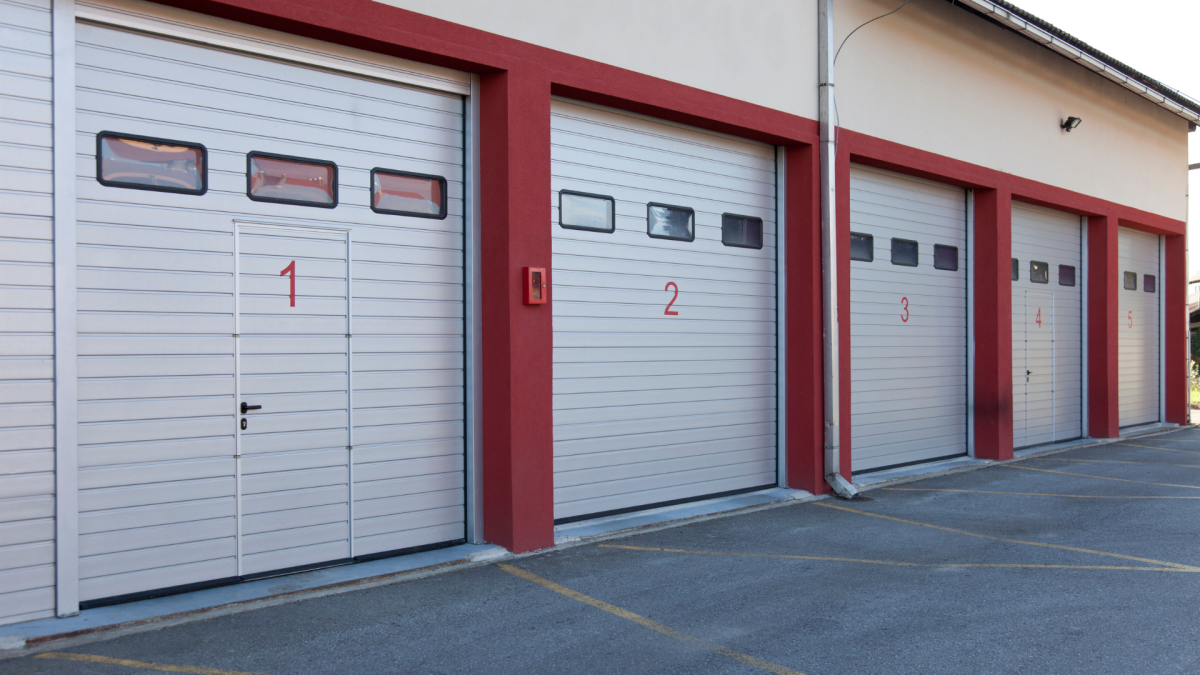
Commercial garage doors don’t fail the way residential ones do. A homeowner using their door four or five times a day notices changes quickly because they’re the only one interacting with the system. A business running a loading dock, service bay, or warehouse has employees, delivery drivers, and equipment moving through the door all day, and no single person owns the observation of how that door is performing. Problems develop incrementally across hundreds of daily cycles until the door stops mid-travel and the business discovers what it had been communicating for weeks.

One pattern that shows up consistently on commercial repair calls is a door that has been gradually slowing its cycle time for weeks before anyone notices. The opener takes a half-second longer to complete each cycle than it did six months ago. No single person in the facility tracks that change because it happens across thousands of cycles rather than overnight. By the time the call comes in, the torsion spring tension has degraded to where the motor is carrying load it was never designed for, and what started as a spring adjustment has become a spring replacement plus full opener calibration job. The business owner almost always says the same thing: I knew something wasn’t right but I thought it would hold. On a commercial door cycling 20 or 30 times a day, that holding period costs considerably more than the original repair would have.


Why Commercial Doors Show Repair Needs Differently Than Residential Ones

The cycle frequency difference between residential and commercial garage doors is the foundation of why commercial repair needs are harder to catch early. A residential door cycling four times a day accumulates roughly 1,500 cycles in a year. A commercial door cycling 25 times a day accumulates more than 9,000 in the same period. Under ANSI/DASMA 102, the specification standard for sectional overhead doors published by the Door and Access Systems Manufacturers Association, commercial door components are rated for specific cycle counts. When a commercial door operates beyond its rated component cycle life, the risk of failure increases non-linearly. Parts don’t wear at a constant rate as they approach their limit. They degrade faster.

Environmental conditions compound this. Dust from loading operations coats rollers and bearings, accelerating friction wear. Temperature swings cause spring steel to expand and contract across every cycle, incrementally fatiguing the metal. Equipment contact transmits impact through tracks and panels that residential doors never experience. A commercial door on a busy property can reach the same component wear state in half the calendar time the cycle rating alone would suggest.


The Warning Signs That Mean Your Commercial Door Needs Repair Now

The single most overlooked warning sign on commercial properties is cycle time drift. The door gradually takes longer to complete a full open or close than it did when recently serviced. What the drift signals is torsion spring tension degradation. As the spring loses its ability to counterbalance the door’s weight, the opener compensates by increasing its output force, drawing more current, running hotter, and wearing its motor faster than its rated service life accounts for. A door that takes noticeably longer to operate than it once did is a door whose opener is already under stress.

Unusual sounds during operation are the second warning sign. Grinding signals metal-on-metal contact from worn rollers or dry bearings. Popping or banging during travel signals torsion spring or cable tension issues, often a spring that has partially lost tension and is flexing under load. Squealing from the track area signals roller wear or track misalignment from equipment contact. A commercial door that was quiet six months ago and now announces itself across the facility is communicating a specific mechanical problem a qualified technician can identify within minutes.

Uneven movement or visible door lean is the third warning sign. A door that hangs lower on one side or travels unevenly signals cable tension imbalance or a broken torsion spring on one side of the shaft. This creates an immediate safety risk in addition to accelerating wear on the functioning spring.

Safety reversal failure is the fourth warning sign and carries regulatory weight beyond the mechanical concern. Under UL 325, the safety standard for door operators published by Underwriters Laboratories, commercial garage door systems are required to reverse automatically when they contact an obstruction during closing. A door that fails this test is not compliant with UL 325 and creates direct liability exposure for the business. On a commercial property where employees and equipment move through the door throughout the day, a non-reversing door is not a maintenance item. It is an immediate commercial garage doors repair situation.

Photo-eye sensor issues are the fifth warning sign. A door that reverses unexpectedly without obstruction, or fails to reverse when there is one, signals sensor misalignment, lens contamination, or sensor failure. In a commercial environment where dust and equipment movement are constant, sensor alignment drifts more frequently than in residential settings.


What Deferred Commercial Door Repair Actually Costs

The cascade effect of deferred commercial garage door repair shows up in almost the same sequence regardless of door type or business. A spring tension issue that starts as a simple adjustment becomes a spring replacement when the opener overcompensates long enough to damage the drive system. A cable showing early fraying that gets ignored becomes a full cable failure that drops the door mid-travel during a business day. A track misalignment from forklift contact becomes a panel deformation requiring door section replacement rather than a track realignment.

A situation we encounter illustrates how quickly the scope expands. A door that has developed enough of a lean to be visually noticeable has usually been that way for some time before anyone escalates the concern. By the time the call comes in, what could have been a cable tension adjustment and spring balance check has become a more involved repair requiring the door out of service for the duration. A business owner who calls when the opener first sounds different typically discovers the repair need is simpler than feared. That outcome is the norm when the call comes early. It becomes an exception the longer it gets delayed.


How a Professional Repair Inspection Actually Works

When a commercial garage doors repair technician arrives, the process starts before any tools come out. The technician watches the door cycle through a full open and close, listening for sound irregularities and observing the speed and evenness of travel. That observation guides where the detailed inspection focuses.

Spring tension is confirmed via the door balance test. With the opener disconnected, the technician lifts the door manually to the midpoint of the opening and releases it. A door with properly tensioned torsion springs holds position. One that drifts downward is under-tensioned, meaning the opener is compensating for a load the spring can no longer offset. Catching this at inspection rather than at failure is the difference between a spring adjustment and a spring replacement plus opener repair.

Cable and drum inspection follows, checking for fraying strands, cable seating, and uneven winding. Opener calibration is verified against the door’s actual weight. Safety reversal is tested against UL 325 requirements. Photo-eye sensors are confirmed aligned. Track alignment is checked for deformation. The inspection closes with a clear explanation of findings, what needs attention now, what can be monitored, and why, with no pressure toward unnecessary work.


When to Stop Using a Commercial Garage Door Immediately

Some commercial door conditions make continued operation unsafe regardless of business pressure to keep the facility running. A visible gap in the torsion spring means the spring has snapped and the door has no counterbalance. The full weight falls on the opener and cables, and the door should not be operated until the spring is replaced. Cables hanging loose or off the drum mean the door can drop unexpectedly. A door leaning significantly lower on one side is in a similar condition. Safety reversal failure creates direct UL 325 non-compliance and employee safety liability. Severe track deformation means the door may derail during operation.

Each of these conditions requires commercial garage doors repair before the door is used again. Continuing to operate around them converts a repair situation into an emergency and increases the total scope and cost of the fix.


Ready for Hands-On Commercial Garage Door Help?

Catching a commercial garage door repair need early is less expensive, less disruptive, and less complicated than waiting until the door decides the timing. Proffitt’s Garage Doors is a locally owned, family-run team serving Beechgrove and nearby communities across Middle Tennessee, licensed and bonded in Tennessee, LiftMaster certified, and backed by about eight years of hands-on garage door experience that includes commercial door repair work across the region. The approach is consistent: diagnose honestly, explain clearly, address what the door actually needs, and stand behind the work. Reach out to Proffitt’s Garage Doors to schedule a commercial repair inspection and find out exactly where your door stands before it tells you itself.
Categories
Garage Door Maintenance & Homeowner Tips

What to Expect From Commercial Garage Door Maintenance?

New Garage Door Installation

Most business owners think about commercial garage door maintenance the same way they think about changing a car’s oil: something that should happen occasionally, probably once a year, and mostly involves a technician showing up, lubricating a few moving parts, and leaving. That picture isn’t entirely wrong, but it leaves out the parts of a commercial maintenance visit that actually determine whether the door stays reliable or starts heading toward an expensive failure. A commercial garage door operates in a fundamentally different environment than a residential one, and the maintenance it needs reflects that difference in ways that matter significantly to the business’s bottom line.

One pattern that shows up on commercial service calls is a motor straining on a door that looks and sounds fine during normal operation. The technician disconnects the opener, lifts the door manually to the midpoint, and releases it. Instead of holding position, the door drifts slowly downward. The torsion spring hasn’t snapped. There’s no visible gap. But across thousands of cycles under commercial load conditions, the spring has lost enough tension that the opener has been quietly compensating for weeks, working harder than its design specification allows. A maintenance visit that runs the balance test catches this. One that skips it misses the single most common cause of premature opener failure on commercial properties.


Why Commercial Garage Doors Need More Attention Than Residential Ones

The gap between residential and commercial garage door maintenance isn’t just about door size. It’s about how differently the two systems are used and the environment they operate in. A typical residential garage door cycles three to five times a day. A commercial door in an active loading or service environment can cycle 20 to 40 times daily, accumulating thousands of cycles in a single year under conditions that accelerate wear far beyond what residential use produces.

ANSI/DASMA 102, the specification standard for sectional overhead doors published by the Door and Access Systems Manufacturers Association, requires manufacturers to provide maintenance instructions and frequencies for their commercial door systems. Temperature extremes, dust, chemical exposure, and repeated contact from equipment all compress the maintenance timeline on commercial properties. A spring rated for a certain number of cycles in a controlled environment reaches that rating faster in a commercial space where every cycle carries more environmental stress. A maintenance schedule built around calendar time alone without accounting for cycle volume almost always runs behind what the door actually needs.


What a Thorough Commercial Maintenance Visit Actually Covers

A complete commercial garage door maintenance service covers more than most business owners expect. The inspection starts with a visual scan of the full system while the door cycles through a full open and close. A technician who knows what to look for picks up on irregularities in movement, sound, and timing before touching anything, because those observations guide where the detailed inspection goes next.

Spring inspection comes first. For commercial torsion spring systems, this means checking the spring shaft for corrosion, looking at the coils for gap formation or deformation, and running the door balance test to confirm tension hasn’t degraded below what the opener can safely handle. The balance test is the diagnostic that the visual inspection can’t replace.

Cable and drum inspection follows. Cables are checked for fraying, inspected where they seat on the cable drum, and examined for uneven winding that signals drum wear or misalignment. A cable that looks intact from across the garage can show early fraying strands on close inspection that become a failure point within weeks under commercial cycling.

Lubrication covers the rollers, hinges, torsion spring shaft, and cable drums. The lubricant type matters. Silicone-based garage door lubricant reduces friction without attracting dust and debris that general-purpose sprays pull into the hardware on commercial properties.

Track and hardware inspection covers track alignment, bracket tightening, and deformation from equipment contact. Opener calibration confirms force and travel settings still match the door’s current weight. The safety reversal is tested against UL 325 requirements. Photo-eye sensor alignment is confirmed, verifying the infrared beam triggers correctly. As DASMA notes in its technical guidance, commercial door systems that rely on photo-eye sensors need regular testing to support ongoing safe operation. Weather seal inspection rounds out the visit, checking the perimeter and bottom seal for gaps or compression failure.


The One Thing Most Commercial Maintenance Visits Miss

The door balance test is the diagnostic most often skipped on a commercial maintenance visit, and skipping it is why many business owners end up replacing an opener that should have had years of service life remaining.

A torsion spring is wound to a specific tension at installation, calibrated to counterbalance the door’s weight so the opener only manages a fraction of the total load. Across thousands of operating cycles, the spring’s ability to hold that tension gradually diminishes. The reduction is small per cycle but cumulative. The opener detects increasing resistance and adjusts its output upward to compensate, drawing more current, generating more heat, and wearing its motor and drive components faster than the manufacturer’s rated lifespan accounts for.

On a commercial door cycling 20 times a day, this tension loss accumulates far faster than on a residential door, because the commercial environment adds stressors that residential use doesn’t produce at the same rate. Temperature swings cause spring steel to expand and contract across every cycle. Dust and debris accelerate coil wear. Impact from equipment transmits vibration through the spring shaft that residential springs never experience at the same frequency.

The balance test takes less than two minutes. With the opener disconnected, the door is lifted manually to the midpoint of the opening and released. A properly tensioned spring holds position. A spring that has lost significant tension lets the door drift downward. Catching this at a maintenance visit and adjusting or replacing the spring before the opener fails costs a fraction of an opener replacement and eliminates the productivity loss from an unexpected commercial door shutdown.


How Often Should Commercial Garage Doors Be Maintained

The right maintenance interval for a commercial garage door is determined by cycle volume, not calendar time. A door that cycles ten times a day and one that cycles forty times a day operate at fundamentally different wear rates, even if they look identical and were installed on the same day. Setting maintenance schedules based on calendar time alone consistently results in visits that arrive after the wear has already accumulated past the point where it’s preventive.

The industry standard for commercial garage door maintenance, supported by commercial door professionals and manufacturer guidance, is semi-annual visits for standard-use commercial doors cycling up to approximately 20 times daily. High-use commercial doors cycling 40 or more times daily benefit from quarterly visits, since the wear rate at that volume is comparable to a standard-use door running twice as long between visits. DASMA recommends monthly safety checks alongside periodic professional service, recognizing that facility staff play a role between professional visits in catching early warning signs.

The cost of semi-annual or quarterly preventative garage door maintenance is small relative to a spring failure, opener replacement, or unplanned commercial shutdown. Reactive repair after a failure consistently costs more than the scheduled maintenance that prevents it.


What to Look for in a Commercial Garage Door Maintenance Team

Commercial garage door maintenance requires a different skill set than residential service. The torsion spring systems on heavy commercial doors are sized and tensioned differently than residential counterparts. The opener systems on commercial applications carry heavier loads through more cycles and require calibration experience that residential work doesn’t develop at the same depth.

Licensing and bonding are baseline requirements on commercial properties. LiftMaster certification connects the installer to UL 325 compliance on the opener side, which matters on commercial properties where the safety reversal and photo-eye systems protect employees and equipment.

At Proffitt’s Garage Doors, the team is licensed and bonded in Tennessee, LiftMaster certified, and backed by about eight years of hands-on garage door experience across Middle Tennessee, including commercial door work on multi-bay shops, service facilities, and specialty configurations. A consistent pattern in how the team operates reflects what a good commercial maintenance visit delivers: the technician explains findings, walks the customer through the condition of each component, and gives an honest assessment of what needs attention now versus what can be monitored. No pressure, no unnecessary recommendations, just a clear picture of where the system stands.


Ready for Hands-On Commercial Garage Door Help?

A commercial garage door that gets the right maintenance at the right interval keeps cycling reliably, protects the equipment and people moving through it, and avoids the unplanned downtime that costs a business far more than a scheduled service visit ever does. Proffitt’s Garage Doors serves Beechgrove and nearby communities across Middle Tennessee with commercial garage door maintenance services backed by real field experience, Tennessee licensing and bonding, and LiftMaster certification. Reach out to Proffitt’s Garage Doors today to schedule a commercial maintenance visit and find out exactly where your door system currently stands.

Categories
Commercial Garage Doors & Business Solutions

Are Commercial Custom Garage Doors Worth the Investment?

The question most business owners ask when comparing standard commercial garage doors to custom options comes down to one straightforward thing: is the higher upfront cost actually worth it? On the surface, a standard commercial door and a custom one both open and close. Both roll up, both come down, and both keep the weather out. The difference shows up over the years that follow the installation, and it almost always shows up in ways the business owner didn’t anticipate when they signed the initial quote. Commercial custom garage doors are built to the specific demands of the property, which is exactly why they hold up where standard doors don’t, and why the cost math tends to shift significantly when you account for the full picture rather than just the purchase price.

One pattern that comes up consistently on commercial properties is a business that chose the standard option at the time of construction to keep initial costs down. Within a few years, the door is denting from forklift and cart contact in an active loading bay, cycling slowly for the volume of traffic it sees, or failing to maintain interior temperature in a space that needs climate control. The early replacement cost, higher energy bills, and lost productivity during downtime all add up. By the time the business is shopping for a replacement, the savings from the original standard door have been spent twice over.


What Makes a Commercial Garage Door Custom

A commercial custom garage door is not simply a standard door in a different size. The customization runs through every component decision: the opening dimensions, the steel gauge matched to the impact demands of the space, the insulation R-value selected for the thermal environment, the spring cycle rating matched to the door’s expected daily traffic, the panel configuration, window placement, finish, color, and weather seal type. Each decision is made based on the specific property and how the door will actually be used, rather than pulled from a catalog designed for the broadest possible range of applications.

DASMA, the Door and Access Systems Manufacturers Association, certifies commercial garage doors against verified performance benchmarks including spring cycle life, R-value, and wind load ratings under ANSI/DASMA standards. A certified commercial door carries documentation for each of those ratings, which means a business owner can match the door’s rated performance directly to the operational demands of the property. A standard door selected without that matching process may meet the minimum 10,000-cycle threshold established under DASMA specifications, which suits light-use applications, but falls well short of what a busy commercial property actually needs. Custom doors are specified to close that gap from the start.


Where Standard Commercial Doors Fall Short

Standard commercial doors are built for the widest possible range of applications, which is exactly what makes them the wrong choice for properties with specific, demanding requirements. The cycle rating is usually the first mismatch. A door rated for 10,000 cycles on a property that opens and closes 20 times a day reaches its rated lifespan in roughly 500 days of operation, less than a year and a half of real use, before springs, cables, and rollers are carrying load beyond their design specification. The door doesn’t stop working the day the cycle count hits its limit, but performance degrades, components fail more frequently, and repair costs climb toward replacement.

Steel gauge is the second common mismatch. Standard commercial sectional doors are typically built to minimum specifications adequate for light-use environments. In an active loading bay where forklifts and equipment move through the opening dozens of times daily, panels dent and deform under repeated contact. Once the structural integrity of a panel is compromised, weather infiltration, pest entry, and security gaps follow.

Insulation is the third. A warehouse or workshop that needs to maintain a specific interior temperature depends on the door’s R-value to hold that environment. A standard door with inadequate thermal resistance becomes a fixed energy cost embedded in every month of operation. DASMA-certified commercial doors carry verified R-value ratings, so insulation performance is documented rather than estimated.

A situation we’ve encountered on commercial properties illustrates how this gap plays out. A business needed a roll-up door for a specific opening and was told by one company that the configuration wasn’t something they could handle. The job required a door built to the opening’s actual dimensions and operational demands, not a catalog option forced to fit. Finding a team willing to spec and install the right door rather than the easiest one is often the first obstacle a business owner hits when a standard solution genuinely isn’t sufficient.


The Real Cost Calculation on a Commercial Door

The accurate cost comparison between a standard commercial door and a custom one requires looking beyond the purchase price. The full picture includes the initial installation, expected service lifespan based on cycle rating and build quality, the energy cost difference driven by insulation R-value over the door’s life, repair frequency during operation, productivity cost of downtime when the door fails, and the eventual replacement cost.

Commercial custom garage doors are typically specified with high-cycle torsion springs rated well beyond the 10,000-cycle minimum, heavier gauge steel that resists impact and deformation, and insulation packages matched to the interior environment. Those specifications extend service life, reduce repair frequency, and lower total cost of ownership. A high-performance commercial door classified under DASMA standards is designed to handle a minimum of 100 cycles per day, putting it in a completely different performance category than a standard option on a high-traffic property.

The upfront cost difference varies by configuration, but the performance gap is not proportional to the price gap. A door that lasts three times as long, requires fewer repairs, and costs less to operate over its lifespan is worth considerably more than its purchase price suggests. Business owners who discover this tend to do so after replacing a standard door early, and most wouldn’t make the same choice twice.


What Custom Actually Means in Practice

On the ground, commercial custom garage doors cover a wider range of applications than most business owners realize before they start looking. A multi-bay shop fitting vehicles or equipment that exceed standard door dimensions needs an opening built to accommodate the actual clearance required, not the closest catalog size. A barndominium or agricultural property with a 12-foot or wider opening needs a door that exists outside the standard range entirely. A temperature-controlled warehouse needs not just the right R-value but also the right perimeter and bottom weather seal. A commercial space where the door is visible from the street needs a finish and panel configuration that matches the building’s exterior.

These are not edge cases. They represent the kinds of commercial properties where a standard door was never the right answer, and where a custom specification is the only path to a door that performs the way the property needs it to. Projects involving multiple doors on a new commercial shop, custom glass configurations on specialty buildings, and large-opening installations for agricultural or mixed-use properties all require a team willing to spec the door to the property rather than the other way around.


Choosing the Right Team for a Commercial Custom Install

A commercial custom garage door installation is more demanding than a residential or standard commercial install. The doors are larger, heavier, and more complex to configure and balance correctly. The stakes of a misaligned track, an improperly tensioned torsion spring system, or an opener not calibrated to the door’s actual weight are higher on a commercial property where the door cycles frequently and downtime has a direct cost.

The UL 325 safety standard for door operators governs both residential and commercial installations, and a certified installer sets up the system to meet that standard after installation. LiftMaster certification covers the installation and calibration of opener systems to manufacturer specifications, which connects directly to UL 325 compliance on the opener side. At Proffitt’s Garage Doors, the team is licensed and bonded in Tennessee, LiftMaster certified, and backed by about eight years of hands-on experience that includes custom and specialty door installations across Middle Tennessee, from multi-bay commercial shops to large-opening specialty configurations other companies declined. Every commercial install is backed by a one-year workmanship warranty plus manufacturer warranties, and if something comes up after the job, the team comes back out and addresses it.


Ready for Hands-On Commercial Garage Door Help?

Commercial custom garage doors are worth the investment when the property’s operational demands exceed what a standard door is built to handle. That covers more situations than most business owners expect before they start asking the right questions. Proffitt’s Garage Doors is a locally owned, family-run team serving Beechgrove and nearby communities across Middle Tennessee, licensed and bonded in Tennessee, LiftMaster certified, and experienced in custom and specialty commercial door installations. If you’re evaluating options for a commercial property, reach out to Proffitt’s Garage Doors and let’s talk through what the right door actually looks like for your space.