
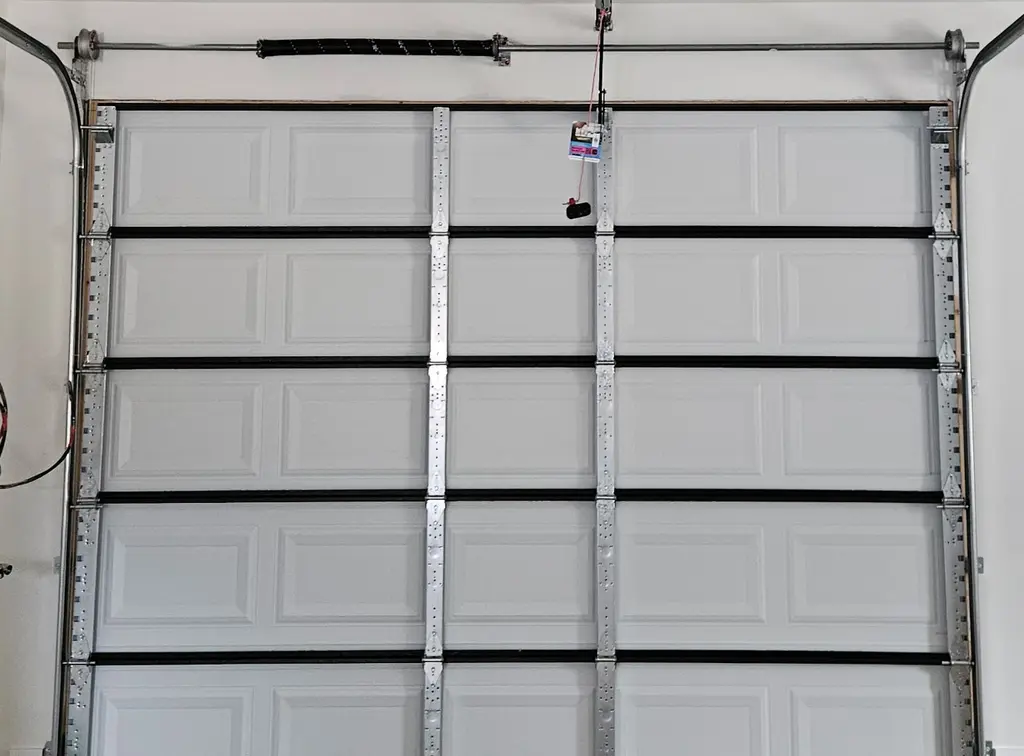
Your garage door sounds louder on the first chilly morning, and the can of lubricant on the shelf looks like an easy answer. Sometimes it is. A squeak at a moving metal part may respond to the product your door manufacturer recommends. Grinding, a crooked door, or a loud bang calls for a different decision, not a thicker coat of spray.
Proffitt’s Garage Doors is a family-owned garage door company based in Beechgrove, Tennessee. We serve homeowners around Middle Tennessee, and we would rather help you describe the sound accurately than have you cover up a damaged part. Here is how to separate a reasonable maintenance step from a repair that should wait for a technician.
First, Know When Not to Use the Door
If the door is crooked, unusually heavy, or unbalanced, or you see a broken spring, loose or frayed cable, displaced roller, or damaged bottom bracket, do not use the garage door until a technician has inspected it. Keep people away from the opening. Do not pull the emergency release, lift the door by hand, or try another powered cycle to pinpoint the sound.
Springs, cables, drums, and bottom brackets are part of a tensioned system. The Door & Access Systems Manufacturers Association (DASMA) warns that cable and bracket work belongs to trained technicians. A lubricant cannot restore a broken spring or correct a door that no longer travels level. DASMA’s garage door system safety guidance explains these limits.
A single quiet squeak from an otherwise normal, level door is different. Still, observe from the floor with the door closed and opener idle before touching any accessible, non-tensioned maintenance point. If you cannot identify the part or reach it without a ladder, a moving door, or nearby tensioned hardware, leave it for a professional.
Which Garage Door Noise Are You Hearing?
| Sound or Symptom | Possible Cause | Recommended Action |
| Light squeaking | Friction at a hinge or metal bearing | Check whether the manual permits lubrication |
| Repeated rattling | Loose or worn hardware | Arrange inspection if it continues |
| Grinding or scraping | Worn rollers, track damage, or misalignment | Stop if the door binds or moves unevenly |
| Loud bang followed by difficulty opening | Possible spring failure | Stop using the door and request repair |
| Motor or rail noise | Opener issue or door resistance | Have the door and opener inspected together |
These symptoms help narrow down the problem but do not confirm which component has failed. If the door is safe and operating normally, note whether the sound occurs during opening, closing, or both. Do not operate an unsafe door just to record the noise.
Why Does Cold Weather Make Garage Doors Noisier?
Cooler temperatures can make existing noises more noticeable. However, cold weather alone does not confirm that the lubricant or springs are responsible. A squeak may come from a moving component, while a scrape or rattle could indicate worn hardware.
Moisture and freezing temperatures may also cause the bottom seal to stick to the floor. Never force a frozen garage door open with the opener.
In Beechgrove and nearby Middle Tennessee communities, temperatures can change between mild afternoons and chilly mornings. Tell the technician whether the noise started with cooler weather or has been present for months.
Which Garage Door Lubricant Actually Helps?
The right answer is a spray-on lubricant approved for your particular garage door and the specific part, not a universal brand or a can applied everywhere. Use a garage-door lubricant approved by your door manufacturer for the specific component. There is no universal product that works for every garage door.
DASMA explains that some spring squeaks are normal and that an appropriate garage-door lubricant may help with isolated noise.
Amarr also recommends lubrication of specified moving parts but warns against lubricating plastic components, including plastic rollers and idler bearings.
Silicone vs. White-Lithium Lubricant
Neither should automatically be considered the best choice.
| Lubricant | What to Know |
| Garage-door-specific spray | Consider it when approved for the component in your manual |
| Silicone spray | Use only where the manufacturer permits |
| White-lithium spray | Check component compatibility before applying |
| Heavy grease or household oil | Avoid substituting these without manufacturer approval |
The lubricant must match the material and maintenance instructions.
Do not spray the entire garage door track. Tracks guide the rollers, and grinding or scraping may indicate damaged hardware rather than a lack of lubrication.
How to Lubricate a Garage Door Safely
Only consider basic lubrication when the door is fully closed, level, visibly undamaged, and otherwise operating normally.
- Check the manual. Identify the door and opener models and their approved lubrication points.
- Choose the correct product. Follow the manufacturer’s requirements for the specific component.
- Keep the door stationary. Work only on safely accessible, non-tensioned parts with the door closed and opener idle.
- Apply only the recommended amount. Keep lubricant away from sensors, controls, floors, and walking surfaces.
- Stop if the noise continues. Do not repeatedly operate a binding door to distribute lubricant.
Never loosen or adjust springs, cables, drums, bottom brackets, or tracks. If the noisy component cannot be identified or reached safely, leave it to a technician.
When Lubrication Will Not Fix the Noise
Worn rollers: A roller that wobbles, has a cracked wheel, or does not follow the track correctly may need replacement. Lubrication will not rebuild a wheel. Keep your hands out of the track and ask a technician to assess the roller, stem, hinge, and track together.
Track alignment or impact: Scraping at a repeatable spot may follow a bent track, displaced mounting, or a damaged door section. Spraying the track can hide the symptom without correcting the geometry. If the door is off track or crooked, do not use it. A technician can decide whether the hardware, track, or sections need work.
Heavy or unbalanced door: A motor should not be used to overcome a counterbalance problem. DASMA explains that openers are intended for properly balanced doors, not as a fix for an unbalanced one. Its opener safety guidance is a useful starting point. Do not disconnect the opener and lift a questionable door to test balance yourself.
Spring or cable failure: A sharp bang, spring gap, slack cable, or suddenly uneven lift demands professional inspection. Do not tighten, wind, unwind, cut, or detach tensioned parts.
Ask Proffitt’s to show you the finding and explain the proposed work before you authorize a repair. We want you to understand what needs fixing, not pay for a spray-and-hope response.
How Much Does Noisy Garage Door Repair Cost?
The cost depends on whether the problem requires lubrication, roller replacement, track repair, spring service, or opener work.
A minor maintenance issue and a damaged lifting system involve different repair costs. Before approving service, ask for a written estimate covering diagnosis, parts, labor, and any additional work.
The right repair should address the cause of the noise, not simply cover it up.
Frequently Asked Questions
Why Is My Garage Door Noisy Only in Cold Weather?
The cooler morning may make an existing sound more noticeable or coincide with a sticking seal, but weather alone cannot identify the part. Note the sound, location, and movement. Do not force a stuck or crooked door.
Should I Use Silicone or White-Lithium Spray?
Neither is a universal answer. Choose a garage-door lubricant and application points permitted by the door or opener manual. Amarr specifically excludes plastic rollers and idler bearings from lubrication. If you cannot identify the part, ask a technician.
Can I Spray Lubricant on the Garage Door Tracks?
Do not coat the whole track as a noise fix. A scrape there may point to roller wear or alignment. Have repeating friction inspected rather than hiding it with spray.
Will Lubricant Fix a Heavy Garage Door?
No. A heavy, crooked, or unbalanced door is a stop-use condition. Do not use the garage door until a technician has inspected it, and do not try to balance it by changing spring tension.
Is a Squeaky Spring Dangerous?
A squeak alone does not prove failure; DASMA notes that normal use can make springs noisy. A broken spring, visible damage, bang followed by difficult travel, or heavy door is different. Never adjust or remove spring hardware yourself.
How Much Does a Noisy Garage Door Repair Cost?
A safe visual observation costs $0, but a repair price cannot be determined from the sound alone. Ask for a diagnosis and written scope separating maintenance from worn-part replacement and any opener work. No reliable repair range follows from the sound alone; get a written local quote after diagnosis.
When Should I Call Instead of Trying Lubricant?
Call when noise persists after permitted maintenance, becomes grinding or scraping, accompanies jerking or resistance, or you see visible damage. Stop using the door immediately if it is crooked, heavy, unbalanced, off track, or has a suspect spring or cable.
Get Help With a Noisy Garage Door in Middle Tennessee
A squeak may need simple maintenance, but grinding, rattling, or a loud bang could indicate damaged components. Proffitt’s Garage Doors serves Beechgrove and nearby Middle Tennessee communities. Call 931-222-0541 and describe the sound, when it happens, and whether the door moves normally.
Our team can inspect the door and opener, explain the findings, and recommend repairs based on the actual problem.