
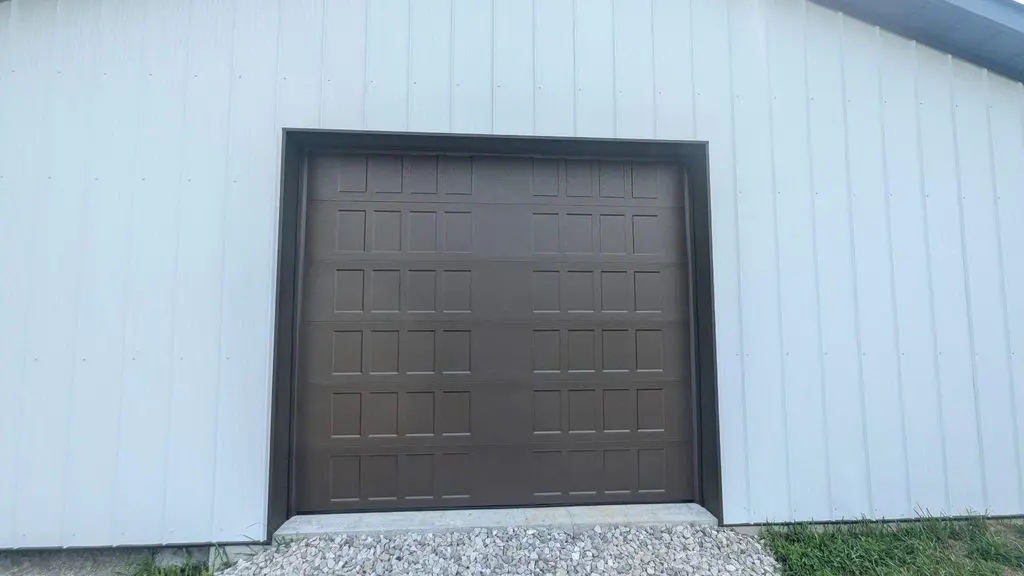
Cold air, daylight, or pests entering beneath your garage door may indicate a worn bottom seal. But before buying replacement rubber, check the seal’s shape, its retaining channel, and where the door meets the floor.
Garage door bottom seal replacement in cold weather may be straightforward if only the flexible insert is worn. A damaged retainer, loose cable fixture, or crooked door requires professional attention.
We’re Proffitt’s Garage Doors in Beechgrove, Tennessee. This guide helps you identify the right seal, understand safe replacement steps, and know when to request service instead.
First, Identify Which Part Is Failing
The flexible bottom seal, sometimes called an astragal, may slide into a channel attached to the bottom section of the door. The channel or retainer is different from the bottom fixture that anchors a lift cable.
Doors vary: some use different profiles or have weatherstripping attached in ways that do not allow a simple insert-only swap.
Check the door maker’s instructions for your exact model before buying a replacement.
| What You See With the Door Closed | What It May Mean | Next Move |
| Split, flattened, or missing flexible strip; straight door and intact channel | The replaceable insert may be worn. | Compare the profile with the door manual and consider insert-only replacement. |
| Light or draft concentrated at one low spot in the slab | Floor slope, a dip, or debris may be the main problem. | Clear accessible debris and assess the floor; a thicker seal is not a universal fix. |
| Channel loose, bent, or fastened into a bottom cable fixture | The job extends beyond a flexible insert. | Do not loosen the fixture; request professional assessment. |
| Door crooked, heavy, rubbing, or stopping short | The opening or door operation needs diagnosis. | Do not use the garage door until a technician has inspected it. |
Door & Access Systems Manufacturers Association (DASMA) guidance says the bottom brackets on either side of the door connect to the springs and are under extreme tension. Only a trained technician should adjust or loosen them. Its guidance also directs homeowners to consult the manufacturer’s model-specific manual.
Safety Boundary: Replace the Insert, Never the Bottom Fixture
Keep hands away from cables, springs, drums, rollers, and brackets. If replacing a seal would require removing screws, drilling through a retainer, taking off a bottom fixture, or changing a cable attachment, stop. Do not use the garage door until a technician has inspected it if a cable is frayed or loose, the door is crooked or heavy, or its hardware is damaged.
Do not pull the emergency release or try to lift a suspect door to make room for the job. DASMA specifically reserves bottom-bracket and cable work for trained technicians.
The instructions below apply only to a sound, normally operating door with a removable flexible insert accessible without disturbing any fasteners or tensioned hardware. If you cannot identify that arrangement confidently, use professional garage door repair instead of guessing.
How to Choose a Seal That Fits Your Door
Do not shop by door width alone. Look at the end of the existing insert where it enters the channel, from a safe position with the door fully closed and idle. The number and shape of the edges that slide into the track must match the retainer.
Note the door width and the manufacturer’s model information, then compare them with the replacement’s profile and the manual. If the old strip has vanished, bring photos of the channel end to a parts supplier or technician rather than ordering from a generic picture.
Take one picture of the whole closed door and floor, one of the seal across the bottom, and one of the accessible channel ends. The wide view shows whether the gap is uniform; the closer views help separate torn material from a damaged retainer. Do not reach around a cable attachment to get a better angle.
A photo is a buying aid, not proof that the rest of the door is safe.
If you cannot see a channel opening with the door closed, do not assume that raising the door will reveal a safe do-it-yourself job. That model may use a different attachment, or the opening may be blocked by a part that should not move. Send the pictures and model information to a door professional instead.
This is particularly useful when a store label says a strip is “universal” but offers no exact retainer profile.
Materials and shapes differ by product. You may see an ethylene propylene diene monomer (EPDM) rubber insert, vinyl, or other weather-seal material, but the material name does not establish that it fits your channel or stays flexible in your conditions. Ask for the specific seal’s dimensions and instructions.
A taller bulb can help some small floor irregularities, but it cannot correct a severely uneven slab or a door that does not close correctly.
How to Replace a Slide-In Bottom-Seal Insert
Before step one: Read the door manufacturer’s instructions. Work only when the door is fully closed, stable, and idle; keep the opener from being activated while your hands are near the bottom edge, and keep other people clear. Do not reach beneath a moving door.
If the insert is inaccessible in that position, do not raise or detach a questionable door to reach it. Ask a technician for help.
1. Confirm the Insert Can Slide Out Without Hardware Work
Inspect the channel ends without touching a cable fixture. If the flexible strip’s end is exposed and the manual identifies it as a removable insert, continue. If a screw, crimp, or fixture blocks it, do not improvise by prying, drilling, or undoing a bracket.
A technician can determine how that specific door is assembled.
2. Match the Old Profile and Prepare the Channel
Record the channel shape, door width, and old insert profile before pulling out the damaged material. With the door still closed and idle, slide out only the flexible insert from its accessible end. Wipe accessible dirt from the channel opening with a cloth.
Avoid sharp tools and do not bend the retainer to force a mismatch. If the strip will not slide free with reasonable hand effort, stop rather than pulling on adjacent hardware.
3. Feed the Correct Insert Into the Track
Following the replacement manufacturer’s instructions, start the matching edges in the channel and feed the insert along the door. A helper can support the loose length without standing under or in the path of the door. Do not staple, screw, or glue a generic strip over a cable fixture.
Leave only the excess length the product instructions call for, and trim the flexible material only after confirming it sits evenly. Never cut a structural piece of the door.
4. Check the Closed-Door Contact
Look from inside at the still-closed door for daylight along the threshold. You want the seal to meet the floor without being folded out of place. If a gap remains at one spot, compare the floor and door line before buying another seal.
If the door looks crooked or cannot close normally, stop; do not adjust the opener force or lower the door harder to squash the material. Have a technician inspect it. DASMA notes that a door that does not move smoothly may have an unsafe condition, including a spring-system imbalance.
Why a New Seal May Not Stop the Draft or Pests
A new garage door bottom seal can reduce drafts and pest entry, but it may not close every gap.
If daylight remains after replacement, check for these common problems:
- Uneven concrete: Low spots may prevent the seal from contacting the floor.
- Incorrect seal fit: The replacement may be twisted, poorly seated, or incompatible with the retainer.
- Worn perimeter weatherstripping: Gaps along the sides or top may still allow air and pests inside.
- Debris buildup: Leaves, dirt, or grit may prevent proper contact.
Inspect the closed door from a safe position. If it is crooked, heavy, or moving unevenly, stop using it and request professional service.
If rainwater enters beneath the door, check whether runoff or poor drainage is responsible. A floor threshold may help with minor gaps, but it cannot correct drainage problems or a door that does not close properly.
Before buying a thicker seal, identify where the gap or water entry begins. A photo can help your garage door technician recommend the right solution.
In Beechgrove and nearby Middle Tennessee communities, winter drafts can draw attention to a gap that was already present. Do not assume a seal will heat the garage or make it pest-proof. If you are comparing a weather-seal fix with a new insulated door, our garage door installation team can help separate an air gap from a door-selection question.
An insulated panel does not repair a poor threshold contact.
What Should You Ask Before Paying for the Repair?
Ask whether the estimate covers only the insert, a new retainer, floor work, or diagnosis of closing and balance problems. Door width, compatible parts, condition of the channel, accessibility, and any separate door repair change the scope. There is no single reliable price for all of those jobs.
Request an itemized local estimate and ask what would require your approval before work begins.
If the insert is the only worn part and your exact door permits a no-hardware swap, you may not need a service visit for it. If the channel or bottom fixture is damaged, paying for qualified diagnosis is better than treating a tensioned attachment as ordinary trim.
Our spring service explains a different, technician-only repair; a draft by itself does not prove a spring is bad.
Frequently Asked Questions
Can I Replace the Bottom Rubber Without Taking the Door Apart?
Sometimes. On a sound door with a compatible slide-in insert, it may come out of the channel without touching hardware. Check your exact model manual first.
If screws or a bottom cable fixture would have to move, leave the work to a trained technician.
Is the Bottom Seal the Same as the Bottom Bracket?
No. The flexible seal closes a gap at the floor; a bottom bracket or fixture can anchor a cable attached to the spring system. Do not remove or loosen that fixture while replacing weatherstripping.
Why Is There Still Daylight Under a New Seal?
The floor may dip, debris may hold the door up, the replacement profile may be wrong, or the door may be closing unevenly. Inspect without operating an abnormal door. Do not change opener force to conceal the gap.
Will a New Seal Keep Mice Out?
It can close a bottom-edge opening when correctly fitted, but it cannot seal other routes into a garage. Check the sides, corners, and surrounding structure as well. No flexible insert is a universal pest guarantee.
Should I Add a Floor Threshold Too?
Only after identifying the actual gap and checking whether a threshold fits the door, floor, and drainage. A threshold cannot correct a crooked door or failing hardware. Ask for a site-specific recommendation if the slab is uneven.
How Much Does Bottom-Seal Replacement Cost?
It depends on the door width, matching insert, retainer condition, labor, and whether a separate door or floor problem needs repair. Ask for a written local estimate that separates parts, labor, and any additional work before you approve it.
Give the Repairer Three Useful Clues
Proffitt’s Garage Doors serves Beechgrove and nearby Middle Tennessee communities. Tell us the shape of the old insert, whether the retainer is straight, and exactly where the closed-door gap appears. Those three clues help us discuss whether an insert, a channel, or a door inspection is the sensible next step before you approve work.
We can show you what we find and answer questions. Call 931-222-0541 or contact Proffitt’s online. If the door is crooked, heavy, or has a damaged cable or bottom fixture, do not use it until a technician has inspected it.